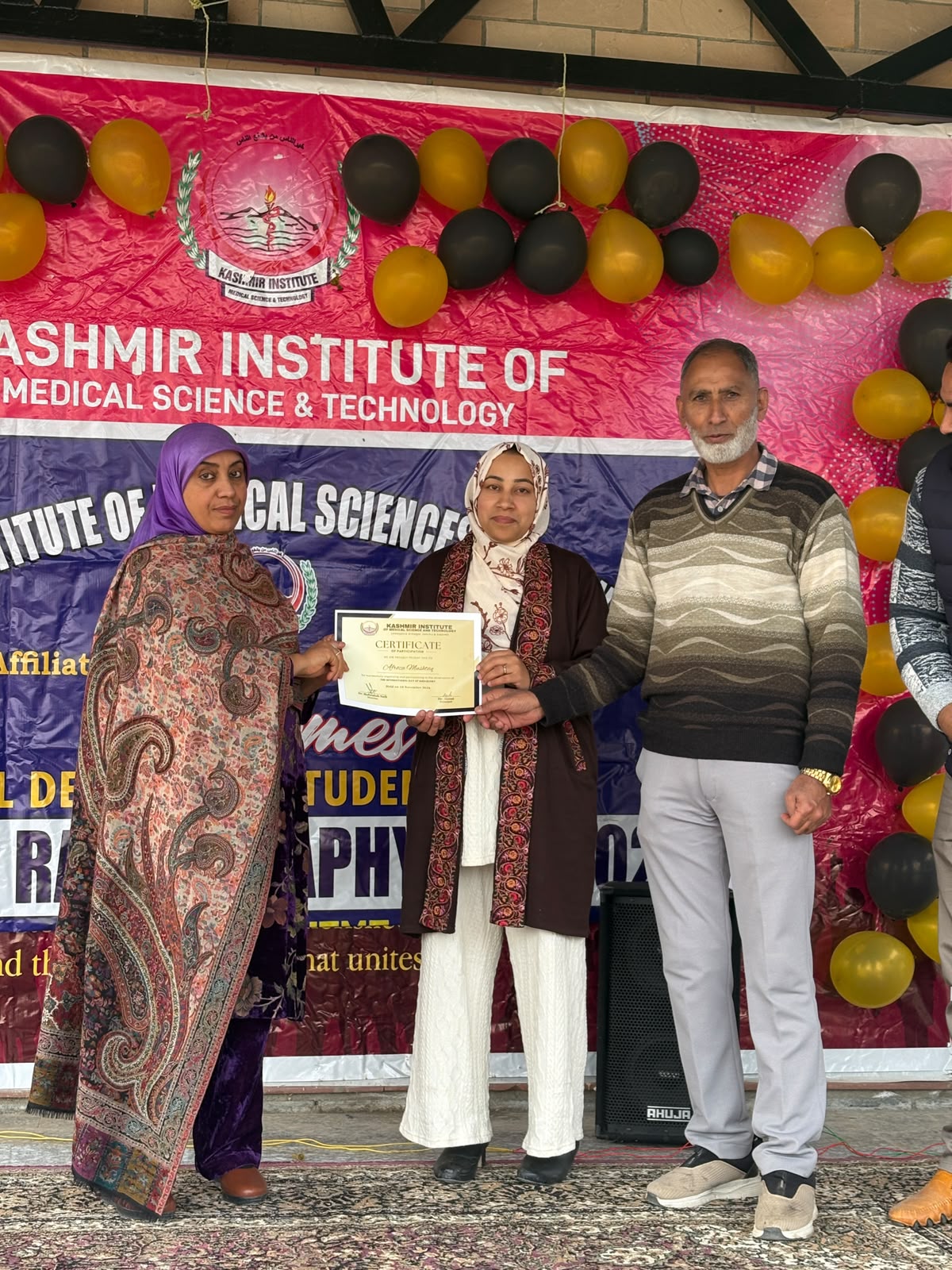

Srinagar, November 10: Kashmir Institute of Medical Sciences and Technology (KIMST) observed the International Day of Radiology week 2026 with great enthusiasm and academic fervour, highlighting the indispensable role of radiology in modern healthcare and the emerging significance of Artificial Intelligence (AI) in diagnostic imaging. The programme commenced with the recitation of the Holy Quran, followed by Naat and a felicitation ceremony.
Mr. Muddasir, Head of the Department of Radiology, KIMST, delivered the welcome address, emphasizing the importance of radiology in medical diagnosis and the transformative potential of AI in enhancing diagnostic accuracy and efficiency. He aptly described radiology as “the art of seeing the invisible and the science of saving lives.”

Dr. Asmat, Professor-cum-Principal, KIMST, in her address, highlighted the historic discovery of X-rays by Wilhelm Conrad Röntgen in 1895, describing it as a revolutionary milestone in medical science. She elaborated on the importance of advanced imaging techniques and contrast media in improving diagnostic precision, aptly referring to radiology as the “eyes of modern medicine.” Drawing upon her professional experience in healthcare, Dr. Asmat particularly emphasized the importance of graceful, empathetic and therapeutic communication among healthcare professionals, especially radiographers, while attending to patients from diverse backgrounds and age groups. She highlighted that patients undergoing radiological investigations may experience anxiety, fear and discomfort; therefore, reassurance, compassion, effective communication and respectful interaction are essential to making diagnostic procedures safe, comfortable and patient-friendly. She stressed that technical competence must always be complemented by humanity and sensitivity in patient care.
Ms. Shaheena, Vice Principal, KIMST, also shared her thoughts on the occasion, highlighting the importance of radiology in strengthening healthcare delivery. She appreciated the efforts of the Department of Radiology in organizing an informative and engaging programme and emphasized continuous learning, practical skill development and awareness regarding radiation safety among budding healthcare professionals. She further encouraged students to embrace technological advancements, particularly Artificial Intelligence, while upholding professional ethics, human compassion and patient-centred care.
The Director, KIMST, appreciated the remarkable contribution of radiology to early disease detection, accurate diagnosis and improved patient outcomes. He emphasized the growing integration of Artificial Intelligence into radiological practice and its potential to enhance imaging efficiency and support clinical decision-making. He congratulated the Department of Radiology, faculty members and students for organizing the event and encouraged them to pursue innovation, professional excellence and compassionate patient care.
Faculty members and students delivered insightful presentations tracing the evolution of radiology, its fundamental principles, radiation safety and protection, and the increasing application of AI in diagnostic imaging. Speakers emphasized that AI is a powerful supportive tool, not a replacement for radiologists, as clinical judgement, ethical responsibility and complex medical decision-making remain fundamentally human responsibilities.