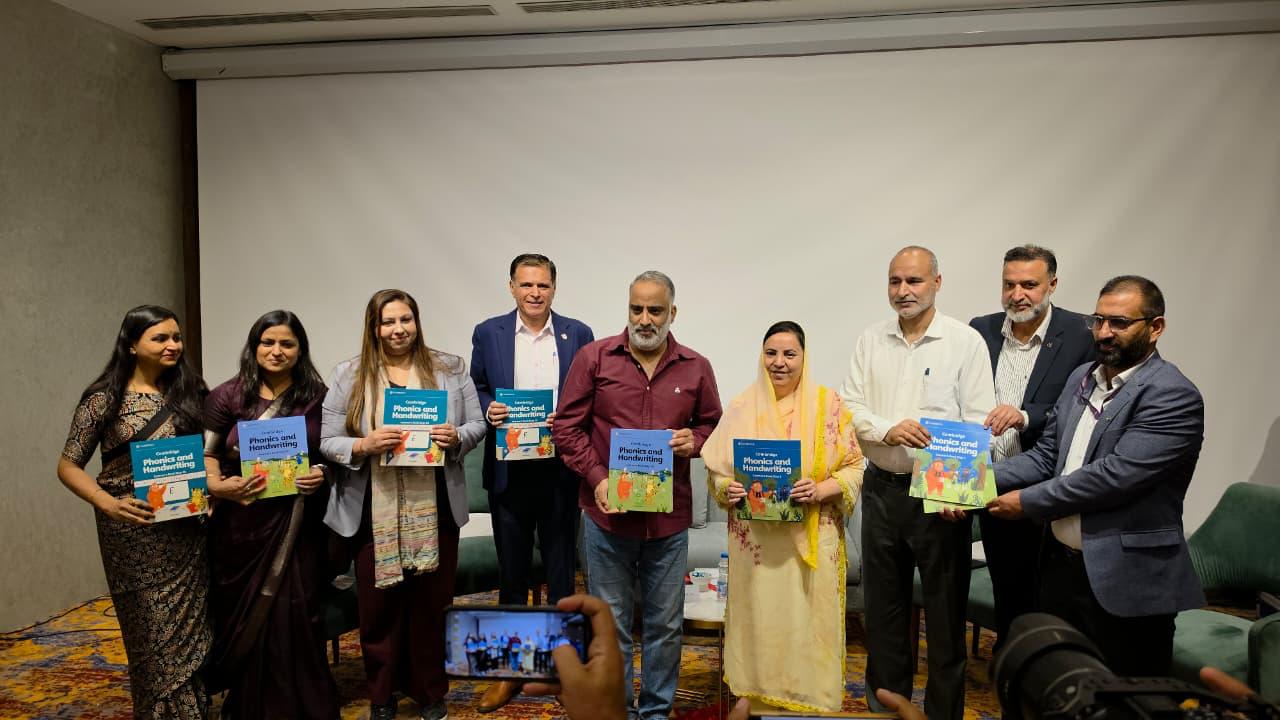

Srinagar, Aug 4: Minister for Health, Medical Education, School Education and Social Welfare, Sakina Ittoo on Tuesday called for stronger collaboration between the government and private educational institutions to transform the education landscape of Jammu and Kashmir, saying that such partnerships are crucial for preparing students to meet the demands of an increasingly dynamic and competitive world. The Minister was accompanied by MLA Hazratbal, Salman Ali Sagar.
Addressing a gathering of trainers, educators and academic leaders during an interaction organised by Cambridge International Education and Foundation World School here in Srinagar, the Minister said that quality education can only be achieved through collective efforts involving the government, private institutions, teachers, parents and the wider community.
Highlighting the growing contribution of reputed private institutions, Sakina Ittoo said organisations such as Foundation World School have been playing a significant role in complementing the government’s initiatives to improve learning outcomes, promote academic excellence and nurture young talent across the region.
“The future belongs to those who possess the right knowledge, practical skills and the mindset to adapt to change. Our education system must empower students not only to excel academically but also to become responsible, innovative and compassionate citizens capable of contributing meaningfully to society,” she said.
The Minister described teachers as the true “builders of the nation,” stating that their influence extends far beyond textbooks and classrooms. She said educators play a defining role in shaping the character, values and aspirations of future generations and urged them to cultivate curiosity, critical thinking, creativity and ethical leadership among students.
Expressing concern over the alarming rise in drug addiction among youth, Sakina Ittoo said educational institutions must emerge as the first line of defence against substance abuse. She stressed that schools and colleges should actively create awareness, strengthen counselling mechanisms and promote healthy lifestyles that encourage students to channel their energy towards constructive pursuits.
“Drug addiction has become one of the most serious social challenges confronting our society. Educational institutions have a vital responsibility in safeguarding our young generation by promoting awareness, resilience and positive engagement,” she said.
The Minister also laid special emphasis on skill development and vocational education, saying the education system should move beyond conventional career choices and expose students to emerging opportunities in sectors such as horticulture, agriculture, hospitality, tourism and other allied industries.
She said Jammu and Kashmir possesses immense potential in these sectors and students should be encouraged to acquire industry-relevant skills that would enable them to become entrepreneurs, innovators and job creators while contributing to the region’s economic growth.
Reaffirming the government’s commitment to educational reforms, Sakina Ittoo said the administration remains focused on creating an inclusive, innovative and resilient education ecosystem capable of addressing the evolving aspirations of students and the needs of the modern economy.
She expressed confidence that meaningful collaboration between the government, educators and private institutions would significantly strengthen the quality of education across Jammu and Kashmir and prepare young learners for leadership roles in an interconnected global society.
Meanwhile, representatives of Cambridge International Education and Foundation World School reiterated their commitment to supporting the Union Territory’s educational transformation by providing globally benchmarked learning frameworks that nurture both academic excellence and holistic development.
They said Jammu and Kashmir stands at an important stage in strengthening its education ecosystem and creating greater opportunities for its young learners. “There is a significant opportunity to equip students with the knowledge, skills and mindset needed to thrive in a rapidly changing world,” they said.
The management highlighted that the Cambridge Pathway, spanning Early Years, Primary, Lower Secondary, Upper Secondary and Advanced stages, provides a coherent international framework designed to develop future-ready competencies, including curiosity, communication, creativity, collaboration and resilience.
They added that the programme combines rigorous curricula with practical teaching and learning resources, continuous professional development for educators and comprehensive assessment practices that monitor learner progress at every stage.
“By delivering a broad and balanced education that develops confident, responsible, reflective, innovative and engaged learners, schools in Jammu & Kashmir can prepare young people not only for success in higher education and their careers but also to make meaningful contributions to their communities and an increasingly interconnected world,” the management said.