
Aashaq Khanday
Pulwama, 22 November: A comprehensive two-day Orientation Programme for Aayas on their pivotal Roles and Responsibilities in Early Childhood Care and Education (ECCE) concluded successfully in Pulwama, equipping participants with the knowledge and skills necessary to nurture young minds in alignment with the National Education Policy (NEP) 2020.
The programme was formally inaugurated by Mr. Shahbaz Ahmad Bodha, Assistant Commissioner Revenue, who underscored the current educational landscape. In his address, he emphasized the critical relevance of ECCE as envisioned by the NEP 2020 and highlighted the indispensable role of Aayas in implementing these foundational educational changes.
Mr. Shabir Ahmad Khan, Chief Education Officer (CEO) Pulwama, spoke passionately about the immense responsibility of Aayas towards the “tender souls” (children). He stressed that Aayas are key figures in shaping the character and early education of these young learners.
Further reinforcing the theme, Mr. R. C. Sharma, Principal DIET Pampore, focused his remarks specifically on the context of Preschool and Balvatika settings, detailing the essential duties and high expectations placed upon Aayas in these foundational years.
The first session was conducted by Dr. Mukhtar Ahmad Malik, DNO for the Foundational Literacy and Numeracy (FLN) Mission. Dr. Malik adeptly and gently introduced the Aayas to their evolving and vital role within the present education system, framing them not merely as helpers but as essential cogs in the educational machinery.
Mr. Arshid Hussain Mir, a Master Resource Person, led the second session, which focused extensively on Holistic Development, with particular attention paid to the emotional development of children. He elucidated how the secure and nurturing environment fostered by an Aaya directly impacts a child’s emotional well-being, building a foundation of trust and safety.
Adding further depth, Ms. Babra Shabir, an official from SCERT, provided valuable insights, elaborating on the theme and urging Aayas to be fully aware of their critical function, particularly in kindergarten settings. She emphasized the Aayas’ role in ensuring a smooth and supportive transition into school education.
The second day commenced with a highly practical session coordinated by Mrs. Sheenam Abrak. She focused on coordinating modules with activities, a hands-on approach designed to help Aayas translate the conceptual gist of the training directly into actual classroom situations. This session aimed to bridge the gap between theoretical knowledge and practical application, making the training immediately useful.
The final core session was taken by Mr. Khanday Aashaq Hassan, another Master Resource Person. He deliberated on the theme “Nurturing Young Minds and the Role of Aayas in Shaping the Future of Children.”
In addition to championing a balanced approach towards the holistic development of children, Mr. Aashaq khanday specifically addressed the non-negotiable importance of Health and Hygiene in the early childhood setting.
He stressed that an Aaya’s core responsibility includes being the primary monitor for cleanliness and hygienic practices. Providing practical remedies for common challenges and incidents encountered in schools, he outlined the Aayas’ specific role in mitigating these situations effectively and calmly.He emphasized that by consistently upholding high standards of health and hygiene, Aayas directly contribute to the physical development component of the child’s holistic growth, ensuring a safe and healthy environment where learning can flourish.
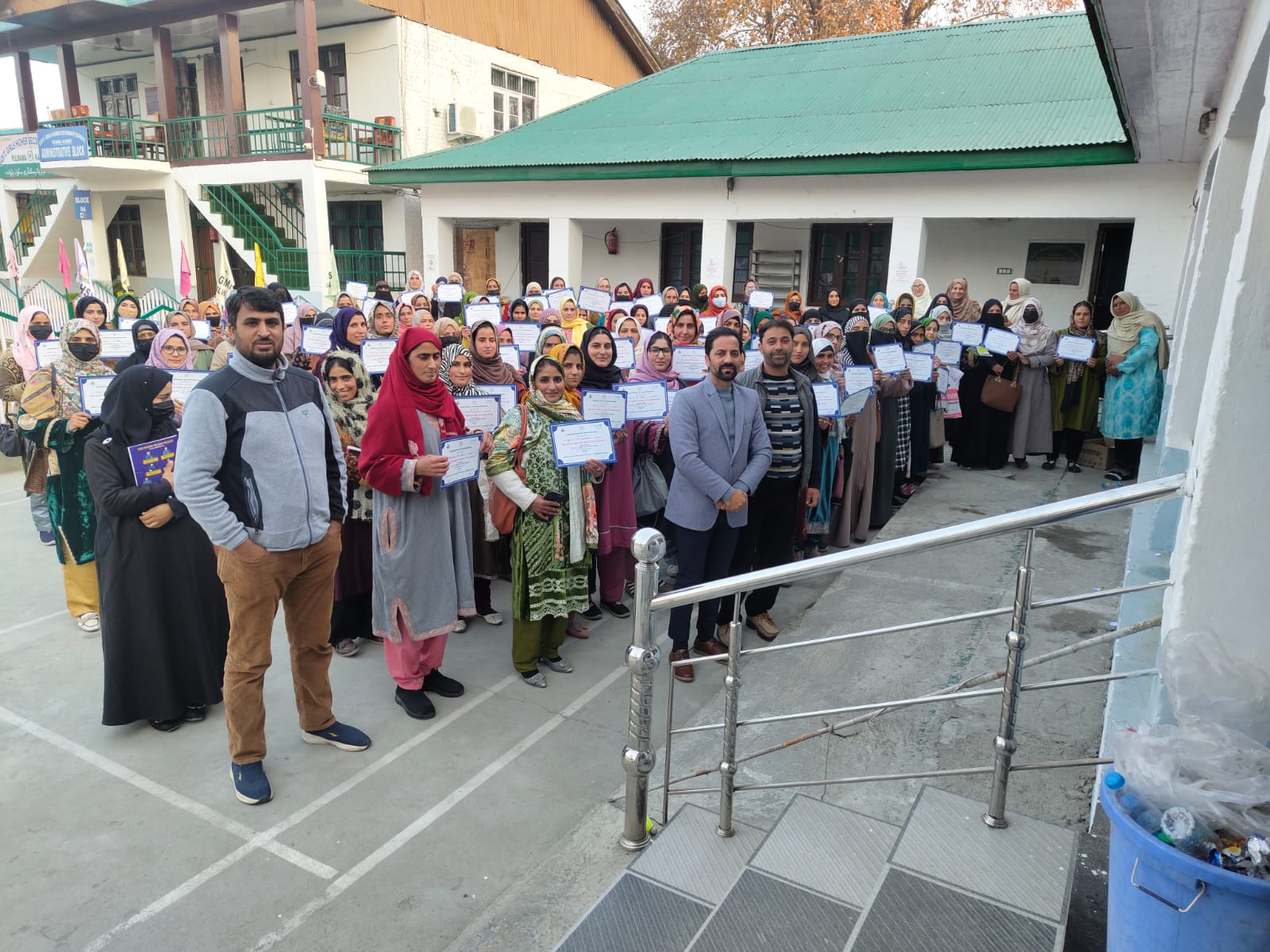
The two-day intensive orientation concluded with a Valedictory Function where certificates were distributed to all participating Aayas, acknowledging their commitment to professional development.
Dr. Mukhtar Ahmad Malik presented the Vote of Thanks, expressing gratitude to the resource persons, dignitaries, and participants. The successful logistics and smooth execution of the programme were made possible with the support provided by the Jammu and Kashmir Association of Social Workers (JKASW) in collaboration with UNICEF .The programme was widely hailed as a significant step towards empowering grassroots caregivers and ensuring a high standard of quality care and education in the crucial early years.