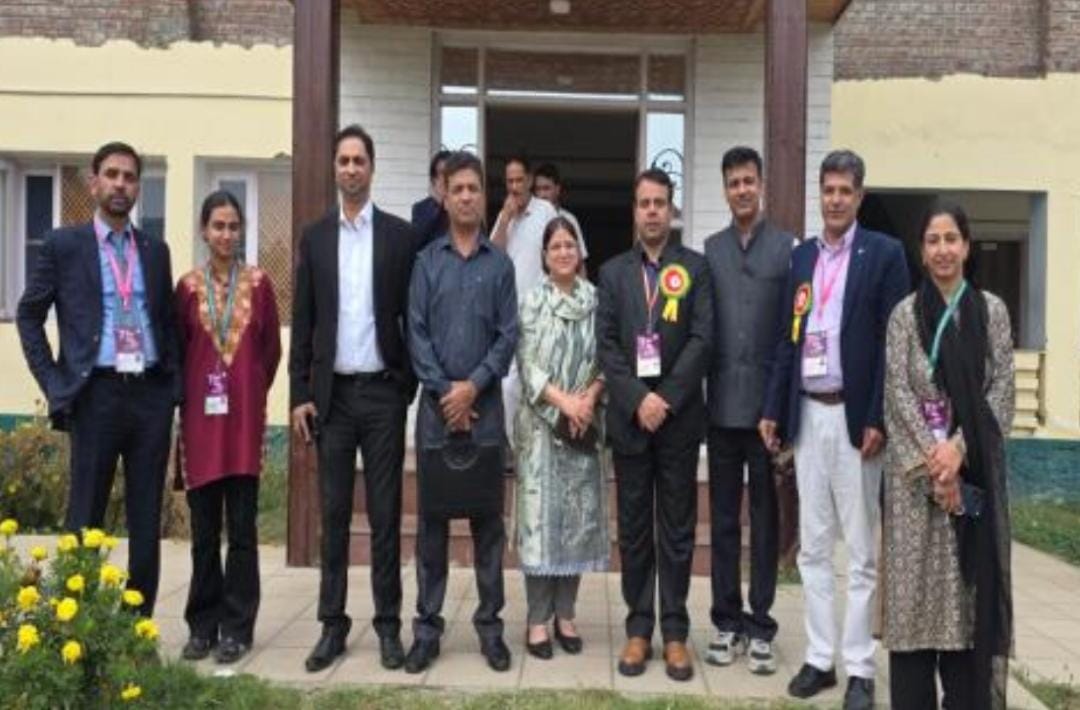

Srinagar, October 8: The three-day 3rd J&K International Conference on Breast and Allied Cancers (JK-IBAC-2026) concluded on Wednesday at Gandhi Bhawan, University of Kashmir, with a focus on strengthening cancer research, institutional collaboration, early detection, screening and community-level awareness.
Organised by the Department of Bioresources, University of Kashmir, in collaboration with the Breast Cancer Patients Benefit Foundation, the conference brought together scientists, oncologists, clinicians, academicians, researchers, healthcare professionals and students from Jammu and Kashmir and across the country.
The conference was supported by DBT and ANRF, Ministry of Science & Technology, Government of India; JKST&IC, Government of J&K; and J&K Bank.
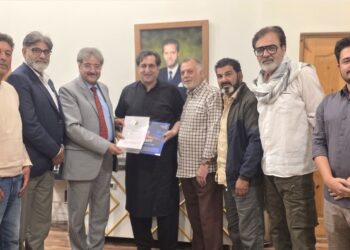
The conference commenced on October 5 with an inaugural ceremony attended by senior academic, scientific and medical dignitaries. The Souvenir-cum-Abstract Book was released during the inaugural session, along with the book titled “AI in Breast Cancer, Stem Cells and Proteomics.”
The inaugural session included addresses by Prof. Fayaz Ahmad, Dean, School of Biological Sciences, University of Kashmir; Prof. Bashir Ahmad Ganai, Dean Research, University of Kashmir; Dr. Sameer Kaul, Senior Consultant Surgical & Clinical Oncology, Apollo Hospital, New Delhi; Prof. Rana Pratap Singh, Vice Chancellor, Gautam Buddha University; and Prof. Nilofer Khan, Vice Chancellor, University of Kashmir.
The first day featured scientific deliberations on new perspectives in breast and allied cancers, covering emerging areas such as artificial intelligence, precision medicine, genetic engineering, transcriptomics and novel therapeutic approaches. Discussions highlighted the evolving landscape of cancer research and the importance of integrating advanced technologies with conventional approaches to cancer diagnosis and treatment.
A dedicated session on funding opportunities and grant mechanisms in cancer research brought together experts from DBT, ICMR and ANRF. Speakers discussed national cancer research programmes, emerging priorities and opportunities available to researchers, while encouraging young scientists to engage with national research missions and develop innovative, collaborative research programmes.
Poster and oral presentations also provided young researchers and scholars an opportunity to showcase their scientific work.
The second day focused on “Precision Oncology and Computational Approaches in Cancer Research.” Scientific sessions covered cancer genomics, RNA splicing, cancer registry data, phytochemical research and research funding. Experts highlighted the role of molecular and computational approaches in understanding cancer biology and developing more precise therapeutic strategies.
Further deliberations under “From Bench to Bedside: The Evolving Landscape of Cancer” focused on translating laboratory discoveries into clinically relevant applications. Presentations addressed cellular senescence, cancer genetics, gall bladder cancer, cancer stem cells and transcriptional regulation, underlining the importance of connecting basic research with patient-oriented cancer care.
Another major session on “Personalizing Cancer Care: Integrating Molecular Profiling, Imaging and Targeted Therapies” highlighted advances in molecular profiling, imaging and targeted treatment. Discussions emphasized tailoring cancer care according to the biological and molecular characteristics of individual tumours.
The day also included deliberations on the global and regional cancer burden, with particular attention to the challenges faced by Jammu and Kashmir, besides poster and oral presentation sessions.
The concluding day focused on “Cancer Prevention, Awareness and Public Health Policy.” Experts discussed breast cancer screening and awareness, oral and breast cancer management, cancer biology, AI-assisted approaches and modifiable risk factors. The scientific sessions highlighted the importance of prevention and early detection alongside advances in treatment.