
By Khushboo Jan, Pinglish Tral
A world full of awareness, different ideologies, and different points of view, where everyone is busy with an ocean of responsibilities, whether it is about work, family, studies, or anything else. Everyone seems to feel trapped in a list of priorities.
One may have beliefs in religious matters but still be far from making them a part of their responsibilities. One may know the consequences of ignoring religious teachings but still not care enough to follow them.
As someone belonging to an Islamic background, I, too, sometimes find myself doing things that are not beneficial, even though I believe that I will be held accountable on the Day of Judgment. Yet, I do not always deeply realize the seriousness of those things.
I want to talk about something about which almost everyone has some knowledge. People know its impact, both positive and negative, yet they still fail to understand its real essence. The real question is: why do people behave as if they are ignorant even when they are fully aware of something?
Sometimes, those who truly understand its depth and the consequences of not following it correctly, especially from an Islamic perspective, remain silent, while others continue to ignore the truth.
Secondly, why do we ignore the facts that we already know by heart and are aware of their consequences?
Let us take an example. When a person is seeking a job or pursuing their studies, they know that if they do not follow the right path, they will ultimately be accountable for their choices. Yet some do not take it seriously, while others pay full attention to it. Why? Because, as I mentioned, they are aware of the consequences.
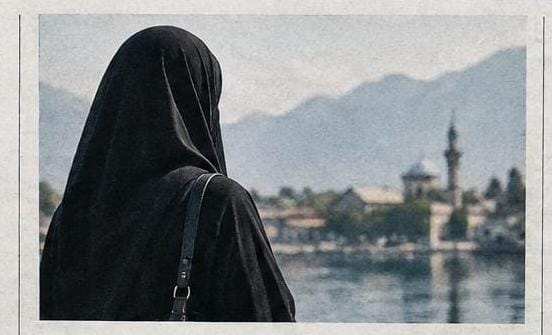
So, if we are all aware of the consequences of not following the proper way of observing pardah, then why are we not afraid?
The simple answer is that people do not fear it or value it the way they should because many have started taking it for granted. Sadly, because of several incidents, people now judge its dignity and significance through the negative actions of a few rather than understanding its true worth.
If someone simply rejects pardah outright, they may believe that denying it directly is wrong. At the same time, some of us misuse it in ways that do not reduce its religious significance, yet sadly affect the place and respect it holds in society.
Let me explain this through a real incident.
We had gone to Srinagar for some work. We were dressed in full Islamic attire. When we reached the market, we entered a shop and started looking at a few things. The shopkeeper, however, was behaving rather rudely and responding to us in an unpleasant manner. We could not understand why.
When we eventually decided not to buy anything, he said, “Women who observe pardah are the ones who turn out to be bad.”
I turned back and asked him, “Are you even in your senses?”
He replied, “Of course I am. Just yesterday, an incident happened here. A woman dressed in full pardah, just like you, came here and was caught stealing.”
The incident made me think about how the actions of a few individuals can sometimes shape the way an entire practice is perceived.
Pardah itself does not become any less dignified or valuable because someone misuses it. But when people use the appearance of modesty to hide wrong actions, they unintentionally contribute to society questioning or misunderstanding something that holds a significant place in Islam.
Pardah deserves to be understood for what it truly is, not judged through the actions of those who misuse it. A woman who chooses pardah should not be looked at with contempt; rather, her choice should be met with respect and appreciation for her courage and conviction.
But sadly, because some people turn the concept into something harsh or misunderstood, the dignity that pardah deserves is often taken away from it. The fault lies not in pardah itself, but in the way some people represent it.
And perhaps the saddest part is that those who sincerely observe it sometimes have to carry the burden of others’ actions. Instead of seeing their choice with respect, people judge them through the mistakes of others.
Pardah should not lose its honour because of those who fail to understand or uphold its true spirit.
Pardah deserves to be seen for the dignity, courage, and faith it represents. It should never be judged by the wrong actions of a few who fail to honour its essence. Its beauty lies not in how people perceive it, but in the meaning and strength it holds.
Perhaps what needs to change is not the pardah, but the way we choose to see and respect it.